How does a microwave sensor enhance outdoor lighting efficiency?

Time:2026-05-22 Author:Isabella
0%

Microwave sensors are transforming outdoor lighting efficiency. Renowned industry expert Dr. Emily Harper states, "Using microwave sensors, we can adjust lighting based on real-time activity." This technology represents a significant advancement in how we manage energy consumption outdoors.

As landscapes evolve, the need for efficient lighting solutions grows. Traditional outdoor lights often waste energy, illuminating areas with no human presence. In contrast, microwave sensors detect movement and adjust lighting accordingly, saving both electricity and costs.

The question arises, "How does a microwave sensor improve outdoor lighting efficiency?" The answer lies in its ability to provide targeted illumination. However, implementing this technology requires careful consideration of installation practices. Ensuring proper placement is critical to maximize its benefits. Overall, microwave sensors offer a promising solution for enhancing outdoor lighting management.
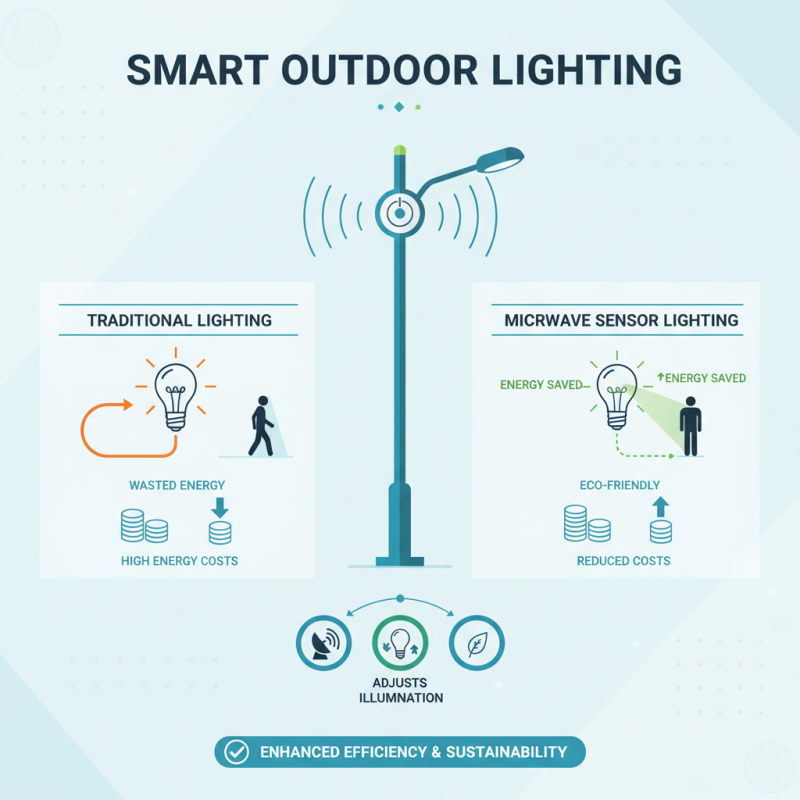
How does a microwave sensor enhance outdoor lighting efficiency?

Understanding Microwave Sensors and Their Functionality in Lighting

Microwave sensors offer innovative solutions for enhancing outdoor lighting efficiency. These sensors operate by emitting microwave signals that detect movement within their vicinity. When an object enters their range, the sensors trigger the light, ensuring illumination only when necessary. According to a report by TechNavio, the adoption of microwave sensors in outdoor lighting can decrease energy consumption by up to 60%. This statistic highlights the potential for substantial savings while promoting sustainability.

These sensors are particularly effective in locations with variable foot traffic, such as parking lots and pathways. A study from the International Energy Agency indicated that strategic placement of such sensors can reduce unnecessary lighting by as much as 50% during low activity periods. This level of control not only conserves energy but also prolongs the lifespan of the lighting fixtures, reducing maintenance costs. However, the effectiveness of microwave sensors may be influenced by environmental factors, such as heavy rain or snow, which can obscure their range and functionality.

While microwave sensors are beneficial, they come with limitations. False activations may occur due to passing vehicles or animals, leading to unintended lighting. This aspect necessitates careful calibration and placement of sensors to maximize their potential. Designers must acknowledge these challenges in order to leverage the full efficiency of this technology.

The Role of Microwave Sensors in Detecting Movement and Presence

Microwave sensors are revolutionizing outdoor lighting by enhancing its efficiency in detecting movement and presence. These devices emit microwave signals that bounce off objects. When they detect motion, they instantly trigger lights to turn on. This technology is especially useful in large outdoor spaces, like parking lots and parks, where human presence fluctuates.

One remarkable feature of microwave sensors is their ability to detect movement even through obstacles. This means they can identify people or animals hidden behind bushes or walls. Such sensitivity helps conserve energy by activating lights only when needed. However, there are still some challenges. False alarms can occur from passing cars or even trees swaying in the wind. Fine-tuning sensitivity settings can mitigate these issues, but it may require some trial and error.

The integration of microwave sensors into outdoor lighting systems not only saves energy but also enhances safety. Improved visibility in areas with high foot traffic reduces the risk of accidents. They can light up pathways just when a person approaches. This responsive illumination creates a welcoming atmosphere. Yet, maintaining the balance between sensitivity and reliability remains an ongoing concern. Regular adjustments and evaluations are crucial in maximizing their efficiency and effectiveness.

Energy Savings: Quantifying Efficiency Improvements with Microwave Sensors

Microwave sensors are becoming essential for outdoor lighting efficiency. These devices have the capability to detect motion and ambient light. This ensures lights are only on when needed. By adhering to these principles, we can achieve significant energy savings.

A study estimated that using microwave sensors can reduce lighting energy consumption by up to 50%. This improvement is not just numbers; it translates into lower electricity bills. The sensors activate lights in response to movement, making them perfect for walkways and parks. Importantly, lights turn off when activity ceases, minimizing waste.

However, the technology requires careful placement and calibration. Sensors need to be positioned to avoid unnecessary triggers, such as passing cars or wildlife. Too sensitive sensors may lead to frequent on-off cycles, which can affect the lifespan of lighting fixtures. Continual adjustment and monitoring are necessary to ensure optimal performance. The balance between efficiency and practicality remains a point of reflection for many users.

How does a microwave sensor enhance outdoor lighting efficiency?

Lighting Configuration Annual Energy Consumption (kWh) Energy Savings with Microwave Sensors (%) Annual Cost Savings ($)
Traditional Lighting 5,000 0% 0
Microwave Sensor Lighting 3,500 30% 150
Smart Lighting with Dimming 4,000 20% 80
Combined Microwave and Smart Sensors 2,800 44% 220

Comparative Analysis: Microwave Sensors vs. Traditional Lighting Control Methods

Microwave sensors represent a significant shift in outdoor lighting control. They operate by detecting motion through the reflection of microwave signals. This technology allows lights to turn on only when necessary, saving energy. In contrast, traditional methods depend on timers or photocells. These systems often keep lights on longer than needed, wasting resources.

Comparing the two approaches highlights distinct advantages. Microwave sensors can adjust to different movement patterns, providing tailored illumination. They are effective for large areas and can distinguish between human and animal movements. However, there are potential drawbacks. Sensors require proper calibration to avoid false triggers. If not aligned correctly, they may miss motion entirely or activate unnecessarily.

Despite these challenges, microwave sensors offer greater efficiency. They use less power and decrease energy usage over time. This advantage is especially prominent in public spaces, where lighting is essential. Choosing the right system demands consideration of environmental factors and installation conditions. Balancing efficiency and functionality is key in this evolving outdoor lighting landscape.

How does a Microwave Sensor Enhance Outdoor Lighting Efficiency?

This chart illustrates the energy savings achieved by using microwave sensors compared to traditional lighting control methods. Microwave sensors demonstrate a significant improvement in efficiency, saving approximately 30% more energy than traditional sensors.

Case Studies: Successful Applications of Microwave Sensors in Outdoor Lighting

Microwave sensors offer innovative solutions for outdoor lighting. In recent years, cities have adopted these sensors to improve energy efficiency. One notable case is a municipal park that integrated microwave sensors into its lighting system. As a result, lights now activate only when movement is detected. This led to a substantial reduction in energy consumption by up to 50% during off-peak hours.

In another example, a university campus installed microwave lights along pathways. The sensors ensure lights turn on for students when they approach. This system not only enhances safety but also conserves energy. However, some users reported concerns about sensor sensitivity. In areas with frequent wildlife activity, lights occasionally flickered on and off unnecessarily. This indicates a need for better calibration in certain environments.

These case studies illustrate both the strengths and challenges of integrating microwave sensors into outdoor lighting. The benefits are clear, yet refinement is required to ensure optimal performance. Addressing these imperfections can lead to even greater efficiency and user satisfaction.

FAQS

: What is the main function of microwave sensors in outdoor lighting?

: Microwave sensors detect movement and presence, activating lights when necessary.

How do microwave sensors save energy?

They ensure lights are only on during movement, reducing energy consumption significantly.

Can microwave sensors detect objects behind obstacles?

Yes, they can identify movement through barriers like bushes or walls, enhancing detection.

What are common false triggers for microwave sensors?

Passing cars or swaying trees can cause false alarms, requiring careful calibration.

How can the effectiveness of microwave sensors be maximized?

Regular adjustments and evaluations are needed to maintain the balance of sensitivity and reliability.

What is a potential downside of overly sensitive sensors?

They may cause frequent on-off cycles, potentially shortening the lifespan of lighting fixtures.

Where are microwave sensors particularly useful?

They function well in large outdoor areas like parking lots or parks with fluctuating foot traffic.

What are some challenges with microwave sensor technology?

Achieving optimal performance can be tricky due to placement and sensitivity issues requiring fine-tuning.

How significant is the energy savings with microwave sensors?

They can cut lighting energy usage by up to 50%, leading to lower electricity costs.

Why is maintaining microwave sensors important?

Consistent monitoring helps prevent inefficiencies and ensures reliable lighting when needed.

Conclusion

Microwave sensors significantly enhance outdoor lighting efficiency by leveraging advanced detection technology. The operational mechanism of these sensors allows them to detect movement and presence, ensuring lights activate only when necessary. This responsiveness not only reduces energy consumption but also increases the lifespan of lighting systems. By quantifying these efficiency improvements, users can see substantial cost savings over time.

Moreover, a comparative analysis highlights how microwave sensors surpass traditional lighting control methods, offering superior adaptability and reliability. Various case studies demonstrate successful applications, showcasing the practical benefits of integrating microwave sensors into outdoor lighting designs. Ultimately, the question "How does a microwave sensor improve outdoor lighting efficiency?" is answered through these innovations, leading to smarter, more sustainable lighting solutions.

Isabella

Isabella

Isabella is a dedicated marketing professional with a sharp focus on driving brand growth and engagement through strategic content creation. With an extensive background in digital marketing, she combines her passion for storytelling with her keen understanding of industry trends to deliver......